

Penetration testing has a cadence problem. Most organizations still test on an annual or semiannual cycle, while their applications, APIs, and infrastructure change every day. A new class of platforms is closing that gap by using AI agents to do the work of a pentester: map the target, form attack hypotheses, execute exploits within an approved scope, prove what is actually exploitable, and hand back evidence and fixes.
2026 is the year this category moved from experiments into procurement. XBOW raised a $120 million Series C at a valuation above $1 billion in March, Novee emerged from stealth in January with $51.5 million, and in July IDC named Ridge Security an IDC Innovator in IDC Innovators: Autonomous Penetration Testing for DevSecOps, 2026.
The platforms below share a goal but differ sharply in how they get there: what they can test, where their context comes from, which AI models they rely on, and where they run. This guide profiles seven of them, starting with Ridge Security, and closes with a buyer checklist and FAQ.
Quick picks
- Ridge Security (RidgeGen, RidgeBot, RidgeOne): for enterprises and MSSPs that need governed autonomous testing across the whole estate, from web apps and APIs to networks, hosts, Active Directory and IoT/OT, with on-premises deployment and a choice of AI model.
- XBOW: for teams that want a cloud service focused on continuous testing of web applications and APIs, with Microsoft Security Copilot and Sentinel integration.
- Novee: for application-heavy enterprises that want a purpose-trained offensive model across web, API, mobile, desktop and LLM applications.
- Equixly: for API-first organizations and teams shipping MCP servers and LLM applications.
- Xint.io: for teams that want black-box web application testing and code analysis from the offensive research team at Theori.
- Prime Security: for product security teams that want white-box pentesting tied to design reviews and code reviews.
- Corgea: for startups and developer-led teams that want AI pentesting bundled into an AI-native AppSec platform.
What autonomous pentesting is, and what it is not
Autonomous penetration testing uses AI agents to carry out scoped offensive testing with minimal human direction. A capable platform discovers or ingests the attack surface, decides which attack paths to pursue, executes them under policy, verifies that an exploit actually works, and reports the result with evidence, remediation guidance and a way to retest the fix. It is easiest to understand by contrast with tools buyers already own:
- Dynamic application security testing (DAST) sends predefined payloads to a running application. Agentic platforms add reasoning: they follow application logic, chain weaknesses across steps and roles, and test business rules that signature-based scanners cannot see.
- Breach and attack simulation (BAS) replays known attack scenarios to check whether security controls detect or block them. Autonomous pentesting looks for exploitable paths in your specific environment.
- Pentesting as a service (PTaaS) and bug bounty are delivery models built around human testers. Several of these providers now add agents of their own, which blurs the line.
- Human-led pentesting and red teaming remain the benchmark for novel research, high-risk systems and formal attestations. Autonomous platforms are best understood as continuous coverage between, and in support of, those engagements.
Gartner groups related tools under adversarial exposure validation (AEV), and IDC frames the application-focused segment as autonomous penetration testing for DevSecOps. Whatever the label, the buyer’s question is the same: can the platform find real, exploitable risk safely and repeatedly, and prove it?
Figure 1 shows the agentic loop that separates autonomous pentesting from signature scanners: map the surface, form hypotheses, execute under policy, validate exploitability, then report, remediate and retest.
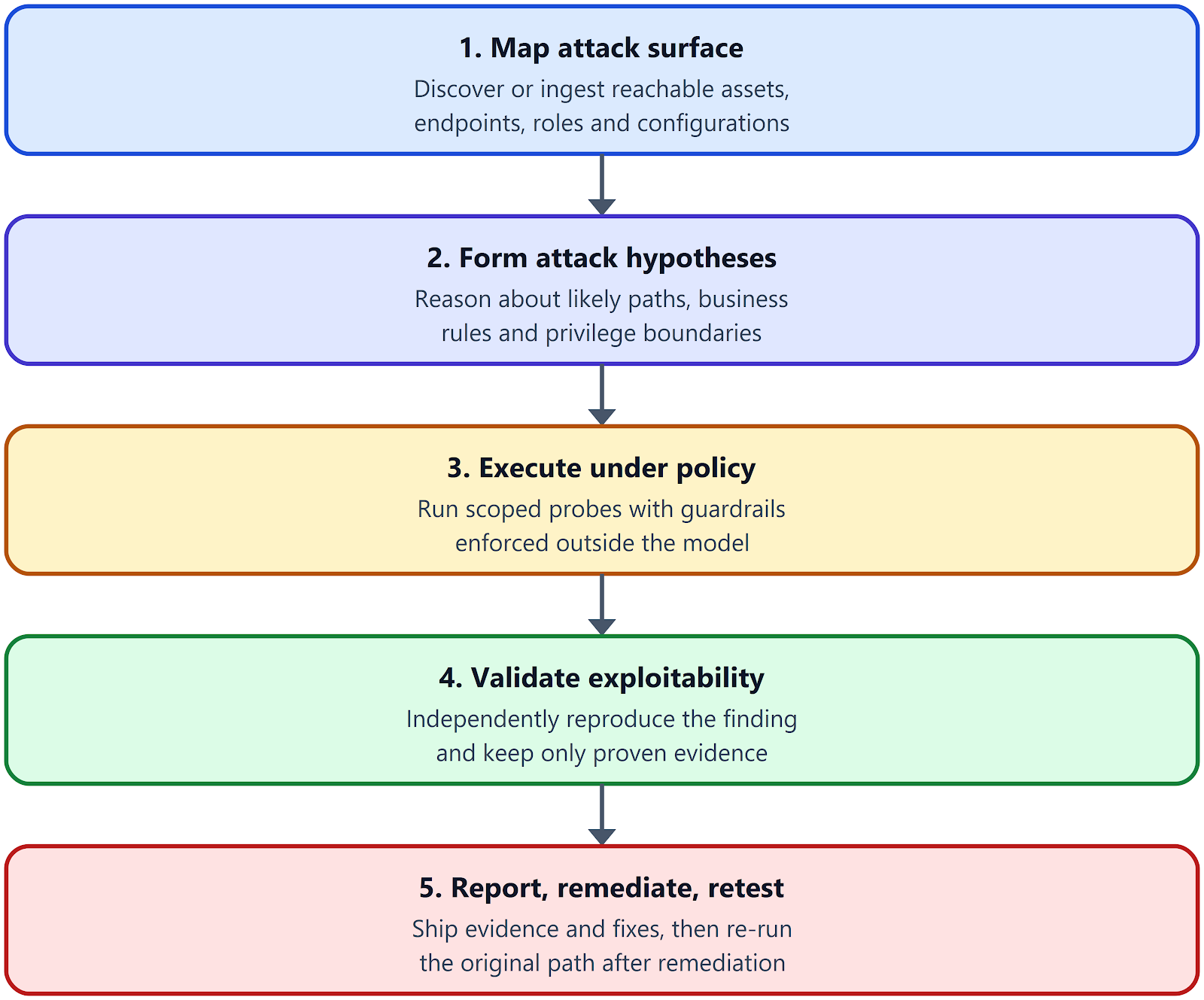
Figure 1: Autonomous pentesting execution loop
That loop is the shared methodology across the category. The differences that matter to a buyer sit one level down: what the platform can reach, how it proves a finding, how it stays safe in production, and where your data and models live.
The questions below are the shortlist I use when a vendor demo turns into a procurement conversation. Ask them in this order, and treat vague answers on proof, guardrails or data residency as a reason to pause.
Seven questions to ask any vendor
- What can it actually test? Some platforms cover only web applications and APIs. Others extend to mobile, LLM applications and MCP servers. A few also test networks, hosts, Active Directory, cloud and IoT/OT. Real intrusions rarely stay at the web tier, so match the scope to where your risk lives.
- How does it prove a finding? Look for a validation step that is separate from discovery, reproducible evidence (requests, responses, payloads, scripts), and a clear policy for unconfirmed results.
- How is it kept safe? Ask whether guardrails are enforced outside the model or depend on the model following instructions; whether there are graded testing modes for production and non-production; how scope is confined; whether credentials ever appear in model prompts or logs; and what is recorded for audit.
- Where does its context come from? Black-box platforms start from a URL. Others use credentials, API specifications, source code, design documents or cloud configuration. Ask whether what the platform learns in one run carries into the next.
- Which AI model does it use, and who controls that choice? Approaches range from proprietary offensive models, to orchestration of several frontier models, to bring-your-own-model designs that include self-hosted open-weight models. This affects cost, data exposure, and what happens when a model refuses an offensive step mid-test.
- Where does it run, and where does your data go? Most platforms are SaaS. If you are in a regulated sector, test segmented or air-gapped networks, or cannot send findings and credentials to a third party, on-premises deployment is decisive.
- How does it fit your workflow and budget? Check CI/CD triggers, ticketing such as Jira, SIEM and SOAR feeds, APIs, and automatic retesting. Then check the pricing basis (per pentest, credits, per asset or subscription) and any AI token costs you will carry yourself.
Figure 2 consolidates the seven buyer questions into a single checklist covering test scope, proof, safety, context, model control, deployment residency and workflow cost.
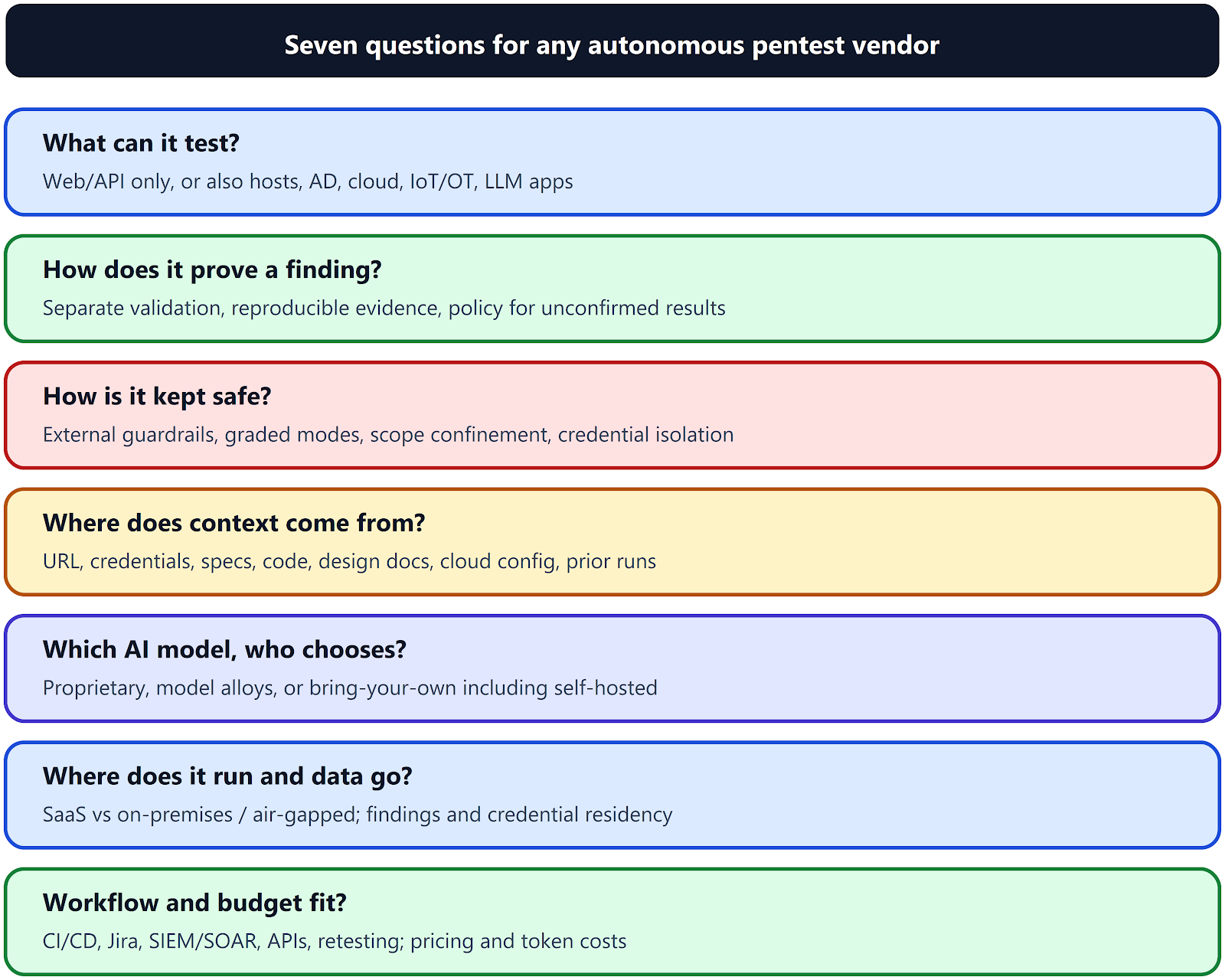
Figure 2: Seven vendor evaluation questions
With those questions in hand, the next step is a side-by-side view of the seven platforms this guide covers. The matrix below is compressed on purpose: it records what each vendor says publicly about surfaces, context, models and deployment, not a lab ranking.
The seven platforms at a glance
Table 1 lists each platform against the same five buyer fields: primary testing surfaces, approach and context, AI model strategy, deployment options, and public proof points. Read across a row for one vendor, then down a column when you are comparing a single decision such as on-premises deployment or model control.
Cells marked “Not detailed publicly” mean I could not find a vendor statement as of the date on this article. That is not evidence that a capability is missing; it is a prompt to ask the vendor directly during a proof of value.
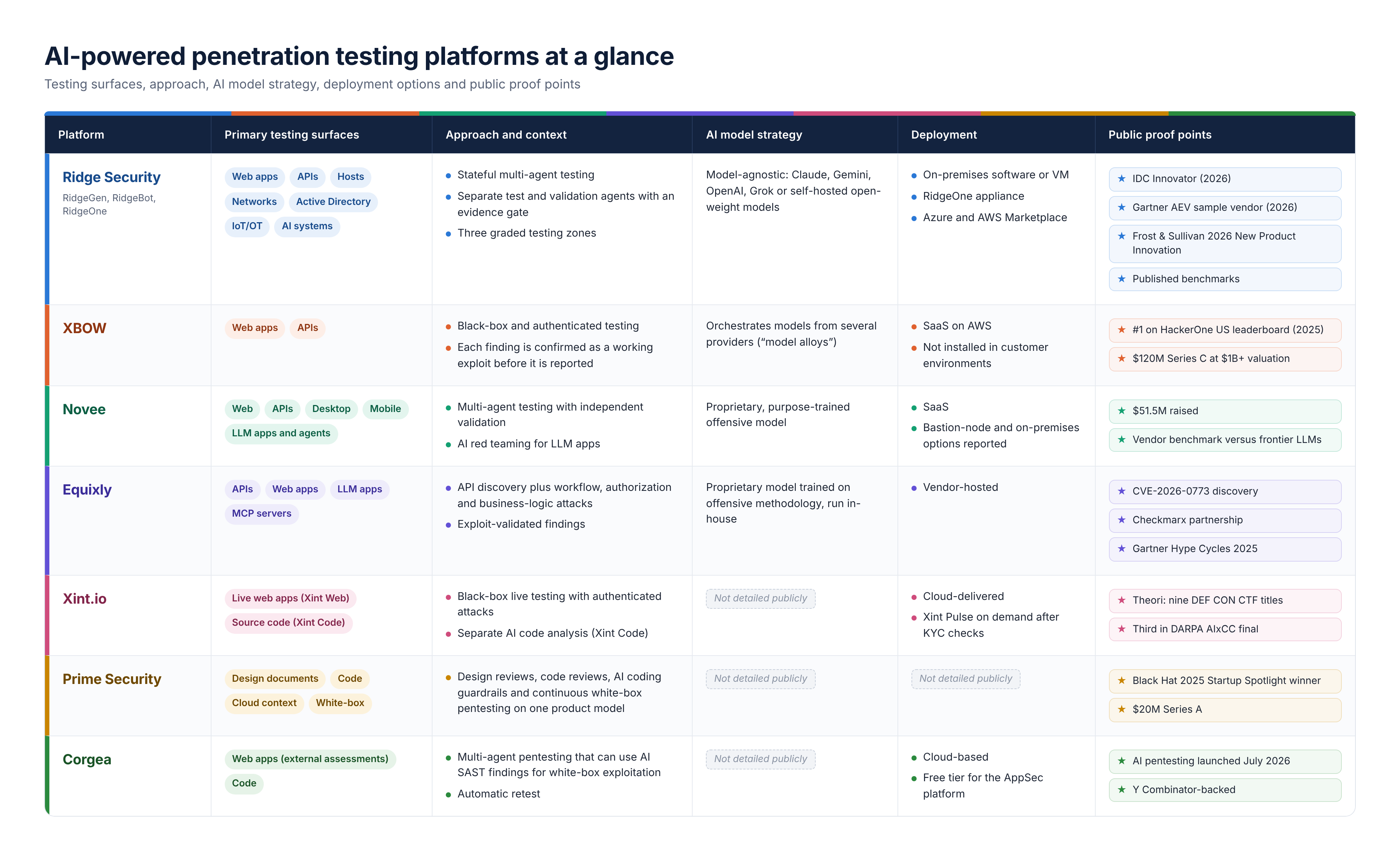
Table 1: Seven autonomous pentesting platforms at a glance
The table reflects public information as of November 2026. “Not detailed publicly” means I could not find a vendor statement, not that a capability is missing.
1. Ridge Security: governed, model-agnostic testing across the whole estate
What it is. Ridge Security is a Silicon Valley company co-founded by Lydia Zhang (President) and Nick Mo (CEO). It built its business on RidgeBot, an automated penetration testing and continuous security validation platform, and has since moved into agentic AI with RidgeGen. Ridge serves enterprises in financial services, government, telecommunications and other critical industries. In July 2026 IDC named it an IDC Innovator in IDC Innovators: Autonomous Penetration Testing for DevSecOps, 2026 (doc #US54175326).
The product family.
- RidgeGen is Ridge’s agentic AI platform for continuous offensive security testing, generally available to enterprises and managed security service providers since August 2026.
- RidgeBot is the continuous security validation platform for IP-based environments, including network infrastructure, operating systems, databases, applications, websites, OT and IoT. RidgeBot 7.0 (June 2026) added fully automated Active Directory penetration testing, from enumeration and credential extraction to lateral movement and Domain Admin path validation, mapped to MITRE ATT&CK.
- RidgeOne (October 2026) is a self-contained appliance that pairs RidgeGen with an open-weight model running on NVIDIA DGX Spark, so testing runs inside the customer’s environment with no external AI calls and no ongoing token costs.
How RidgeGen works.
- Finding is separated from proving. Test Agents probe the attack surface, Validation Agents independently reproduce what they find, and an Evidence Gate promotes only proven findings to the report.
- Stateful by design. RidgeGen preserves what it learns during an assessment, and a shared Ridge Knowledge store builds enterprise memory across runs. Operators can also teach it about their environment through an open prompt interface. This matters for multi-step attack chains, where one proven weakness, such as an authentication bypass, should change what gets tested next.
- Reasoning is separated from authority. Safety-critical policy is enforced outside the model’s discretion. Testing runs in one of three zones: Safe (the production default, with write, modify and delete actions blocked), Guarded (temporary, cleaned-up writes allowed only to prove a finding) and Authorized-Aggressive (non-production only, with signed authorization). Higher-impact actions need explicit approval and are logged for audit.
- Credentials stay out of the model. SafeBox applies credentials at the tool boundary, so they never appear in a prompt, in agent memory or in stored evidence.
- Bring your own model, and your own agents. RidgeGen supports Anthropic Claude, Google Gemini and Vertex AI, OpenAI, Grok and self-hosted open-source models, and customers can switch between them. Custom agents can be added, but they inherit the platform’s authority model, tool boundaries and verification gates.
- Fix and verify. Each validated finding comes with a remediation plan, and one click re-runs the original attack path to confirm the fix. A REST API and integrations with enterprise ticketing and ITSM platforms including Jira and ServiceNow, DevSecOps pipelines, SIEM, SOAR and vulnerability management tools, including CrowdStrike Falcon Next-Gen SIEM, move results into existing workflows.
Where Ridge stands out.
- Scope beyond the web tier. Most platforms in this guide test applications. Ridge’s portfolio covers applications and APIs and also the infrastructure an attacker moves into next: hosts, networks, Active Directory and IoT/OT. For buyers who want one governed program instead of separate tools for application and internal testing, this is the main differentiator.
- Your data stays in your environment. RidgeGen deploys on-premises as a self-contained package, and RidgeOne goes further by running the model locally too. That is a practical requirement in many regulated, government and critical-infrastructure environments, and it is uncommon in a category dominated by SaaS.
- Model choice, backed by evidence that the harness matters. In a September 2026 benchmark that Ridge published (I wrote the analysis), eight AI models ran inside RidgeGen across 96 model-target runs against VAmPI, Metasploitable3, OWASP Juice Shop and OWASP WebGoat. Grok 4.5 led cumulative coverage at 77%; Claude Opus 4.6 reached 63% at roughly $217 per run; Gemini 3 Flash reached 52% at about $5.42 per run; and the open-weight GPT-OSS-120B had the best efficiency, at 16.9 findings per million tokens for about $2.32 per run. Frontier models also sometimes refused legitimate steps mid-workflow, which Ridge handles with architecture and tool-layer controls rather than relying on the model. The takeaway: the best general-purpose model is not automatically the best pentester, and a platform that lets you choose can tune for coverage, cost or data locality.
- Depth on a common target. In a March 2026 head-to-head on OWASP Juice Shop with every tool using the same model (Gemini 3 Flash), RidgeGen reported 55 findings, all evidence-backed and nine of them critical, compared with 27 findings for Shannon (10 of them validated) and six for Strix. RidgeGen was the only one of the three to report business-logic findings.
- Third-party recognition. Beyond the IDC Innovator designation, Ridge was named a sample vendor for adversarial exposure validation in Gartner’s 2026 Hype Cycle for Security Operations and is recognized in Gartner’s Market Guide for AEV. It received Frost & Sullivan’s 2026 Global New Product Innovation Recognition for RidgeBot, a 2026 Intellyx Digital Innovator Award and a 2026 GOVIES award. RidgeBot holds a 4.5 out of 5 rating on G2 from 101 reviews.
What to consider.
- Ridge offers several products for different buyers, so map your use case to the right one: RidgeGen for in-depth testing with an agentic approach, RidgeBot for broad and fast validation, and RidgeOne for a turnkey private appliance.
- When you bring your own frontier model, its token spend is an operating cost you manage, and model choice changes coverage, as the benchmark shows. RidgeOne’s local model is the fixed-cost alternative.
- The benchmarks above are vendor-run against intentionally vulnerable applications. As with every vendor here, run a proof of value on your own environment.
Best for: enterprises, government agencies and MSSPs that want one governed platform for application and infrastructure testing, need to keep testing data on-premises, and want control over which AI model does the work.
Figure 3 traces RidgeGen’s separation of finding from proving: Test Agents probe, Validation Agents reproduce, an Evidence Gate promotes only proven results, and remediation includes one-click retest, with safety zones and SafeBox kept outside the model.
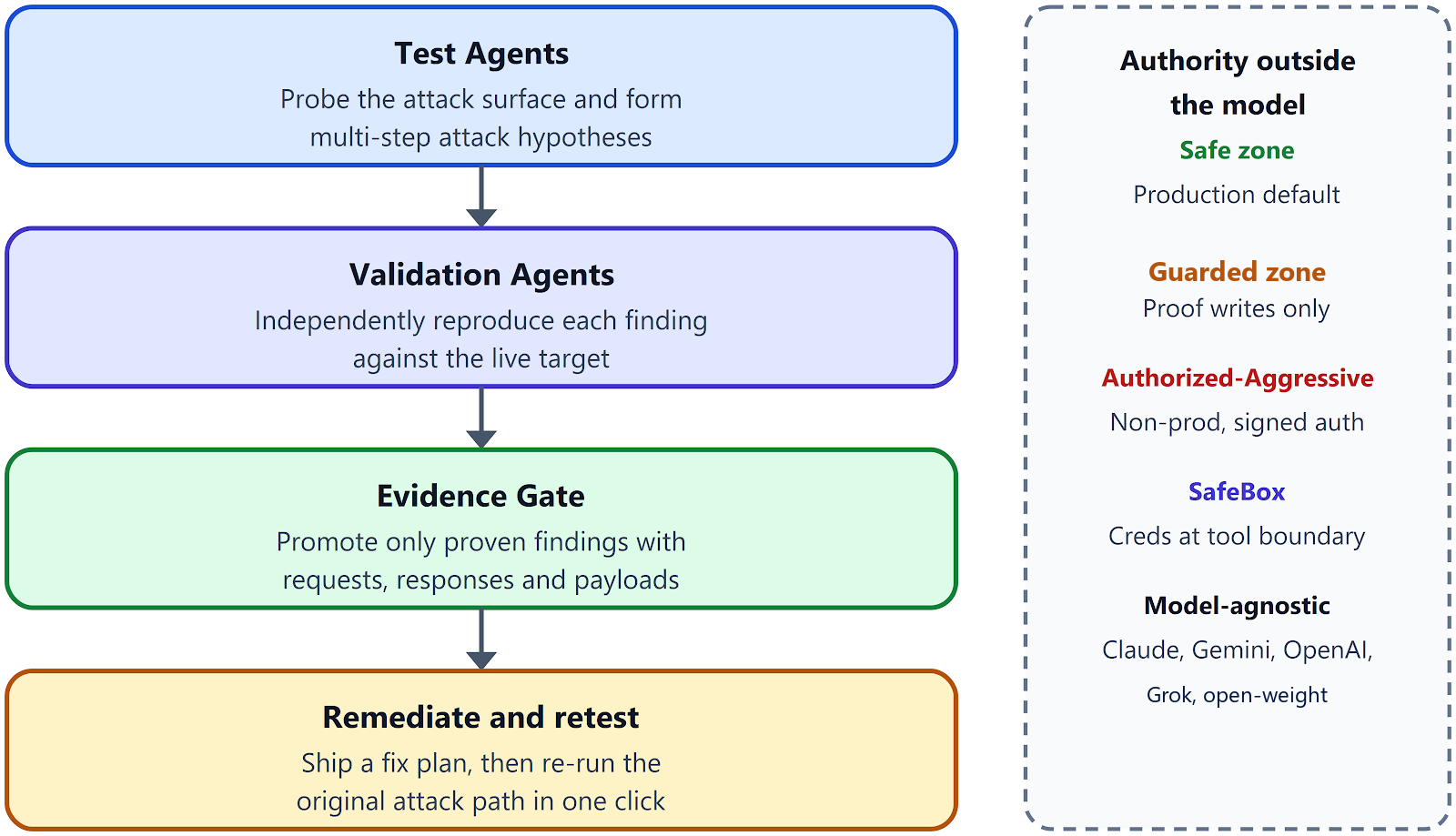
Figure 3: RidgeGen validate-then-report pipeline
2. XBOW: cloud-native testing of web applications and APIs at scale
What it is. XBOW was founded in 2024 by Oege de Moor, who created GitHub Copilot and GitHub Advanced Security, and is based in Seattle. It is the best-funded company in this group: a $75 million Series B in June 2025, a $120 million Series C led by DFJ Growth and Northzone in March 2026 at a valuation above $1 billion, and a $35 million extension in May 2026.
How it works. XBOW tests web applications and APIs, authenticated or unauthenticated, in production or staging, and reports only exploits it has validated. Its agents combine models from several providers, an approach XBOW has described publicly as “model alloys.” It runs as SaaS on AWS and is not installed in customer environments. Pricing is usage-based through Attack Credits; a 12-month credit package is listed on AWS Marketplace at $50,000. At RSAC 2026 XBOW announced integrations with Microsoft Security Copilot and Microsoft Sentinel data lake, and it also offers a Jira integration, a public API and EU data residency.
Proof points. In 2025 XBOW became the first autonomous system to reach #1 on HackerOne’s US leaderboard, and it reports having submitted more than 1,060 vulnerabilities to real bug bounty programs.
What to consider. Coverage centers on web applications and their APIs; networks, hosts and Active Directory are outside its documented scope. It is cloud-only, and credit-based consumption needs governance so that test depth and frequency stay within budget.
Best for: organizations whose risk is concentrated in internet-facing web applications and APIs, especially those standardized on Microsoft security tooling.
3. Novee: a purpose-trained offensive model across application types
What it is. Novee was founded in 2025 by Ido Geffen (CEO), Gon Chalamish (CPO) and Omer Ninburg (CTO), with teams in Tel Aviv and New York. It emerged from stealth in January 2026 with $51.5 million in seed and Series A funding led by YL Ventures, Canaan Partners and Zeev Ventures.
How it works. Novee’s defining choice is a proprietary, purpose-trained and patent-pending AI model built specifically for offensive security rather than a general-purpose LLM. The company reports that the model outperformed frontier models such as Gemini 2.5 Pro and Claude 4 Sonnet by more than 55% on constrained web exploitation challenges. Its platform covers web applications, APIs, desktop software, LLM applications and, since July 2026, mobile apps. In March 2026 it introduced AI Red Teaming for LLM Applications (in beta at launch), which probes chatbots, copilots and agents for prompt injection, jailbreaks, data exfiltration and agent manipulation.
What to consider. With a proprietary model, the vendor decides when and how the model changes, so ask how it is retrained as attack techniques evolve. The benchmark results are vendor-reported. Public materials focus on applications rather than network or Active Directory testing.
Best for: application-heavy enterprises that want one vendor across web, mobile and AI applications and prefer a model trained for offense.
4. Equixly: API-first testing that extends to MCP servers and LLM apps
What it is. Equixly is an Italian company founded in 2022, with offices in Italy and London. It raised a €10 million Series A in December 2025 led by 33N Ventures, with Alpha Intelligence Capital participating.
How it works. Equixly’s Agentic AI Hacker is a proprietary model trained on offensive security methodology, including attack patterns, exploit chains, business-logic abuse and API interaction sequences. It discovers API endpoints (including undocumented ones), chains interactions across workflows, and targets authorization failures such as broken object level authorization (BOLA). Findings are exploit-validated before they are reported. Tests can be triggered from deployment pipelines, and a June 2026 MCP integration lets developers create tests and retrieve findings from AI coding assistants such as GitHub Copilot and Claude. A March 2026 partnership with Checkmarx connects Equixly’s runtime results with Checkmarx’s code analysis. Equixly runs its models in-house rather than relying on a third-party LLM provider.
Proof points. In January 2026 Equixly disclosed CVE-2026-0773, a critical deserialization flaw in AI infrastructure that its agent found during routine API testing. Equixly is also recognized in Gartner’s 2025 Hype Cycles.
What to consider. The platform is API- and application-centric, so infrastructure and Active Directory testing need another tool.
Best for: API-heavy businesses and teams building MCP servers and LLM-powered services.
5. Xint.io: black-box web testing from a champion offensive research team
What it is. Xint.io is the autonomous pentesting platform from Theori, an offensive security firm founded in 2016 by Carnegie Mellon University alumni. Theori’s researchers have won the DEF CON CTF nine times and placed third in the final of DARPA’s AI Cyber Challenge in August 2025. Xint.io is based in Austin, Texas.
How it works. Xint Web, launched in October 2025, runs black-box penetration tests against live web applications, including authenticated, post-login attacks and a proxy mode. Xint Code, launched in March 2026, applies AI to large codebases to find exploitable vulnerabilities, including business-logic flaws. In July 2026 the company added Xint Pulse, an on-demand black-box pentest that can be bought for a single application and includes up to three free retests; to prevent misuse, accounts are opened only after KYC validation.
Proof points. Theori reported supplying Xint Web to Korea’s Woori Financial Group in August 2026, and Xint cites The Hacker News naming it best autonomous pentesting platform in 2026.
What to consider. The focus is web applications and code; network and Active Directory testing are not part of its public scope, and its AI model strategy is not detailed publicly.
Best for: security teams that value elite offensive research pedigree for web applications and want code analysis from the same vendor.
6. Prime Security: pentesting that starts from the product design
What it is. Prime Security was founded in late 2023 by Michael Nov (CEO), Dimitry Shvartsman (CPO), Danny Hanga (CTO) and Matan Markovics (VP R&D), and operates in New York and Tel Aviv. It won the Black Hat 2025 Startup Spotlight competition and raised a $20 million Series A in December 2025 led by Scale Venture Partners. Named customers include PayPal, Qualtrics, Bumble and ThoughtSpot.
How it works. Prime began with an Agentic Security Architect that automates security design reviews before code is written. In August 2026 it expanded into a broader product security platform that combines autonomous design reviews, AI security code reviews, guardrails for AI coding agents, software supply chain security and continuous white-box pentesting, all built on a shared understanding of the product and its architecture.
What to consider. Pentesting is one component of a design-first platform, and white-box testing depends on access to design documents and code. Teams that also need runtime testing of deployed systems or infrastructure should plan for complementary coverage.
Best for: product security teams that want offensive testing connected to design review and code review.
7. Corgea: AI pentesting inside an AI-native AppSec platform
What it is. Corgea is a San Francisco company backed by Y Combinator, which raised a $2.5 million seed round led by Shorooq Partners in 2024. Its platform combines AI-powered static analysis (SAST), dependency scanning, secrets detection, container and infrastructure-as-code scanning, and attack surface mapping.
How it works. Corgea launched AI Penetration Testing for autonomous external assessments in July 2026, and its Q3 2026 product update describes it as a beta add-on. The engine uses multiple collaborating agents (hundreds, for complex targets) and can use Corgea’s own AI SAST findings to guide white-box exploitation of issues static analysis has already flagged. It supports one-time and continuous testing, retests automatically after remediation, and produces auditor-ready reports. Corgea reports that in one engagement its engine found 25 issues in four to eight hours, compared with six found by a human pentester over two weeks.
What to consider. This is the newest pentesting offering in the group, and it delivers the most value when you also use Corgea’s code scanning.
Best for: startups and developer-led teams that want code scanning and AI pentesting in one product, with reports ready for audits and customer security reviews.
Figure 4 contrasts application-centric platforms focused on web, API, mobile, LLM and design or code context with Ridge Security’s full-estate program that also covers hosts, networks, Active Directory, IoT/OT and AI systems under on-premises options.
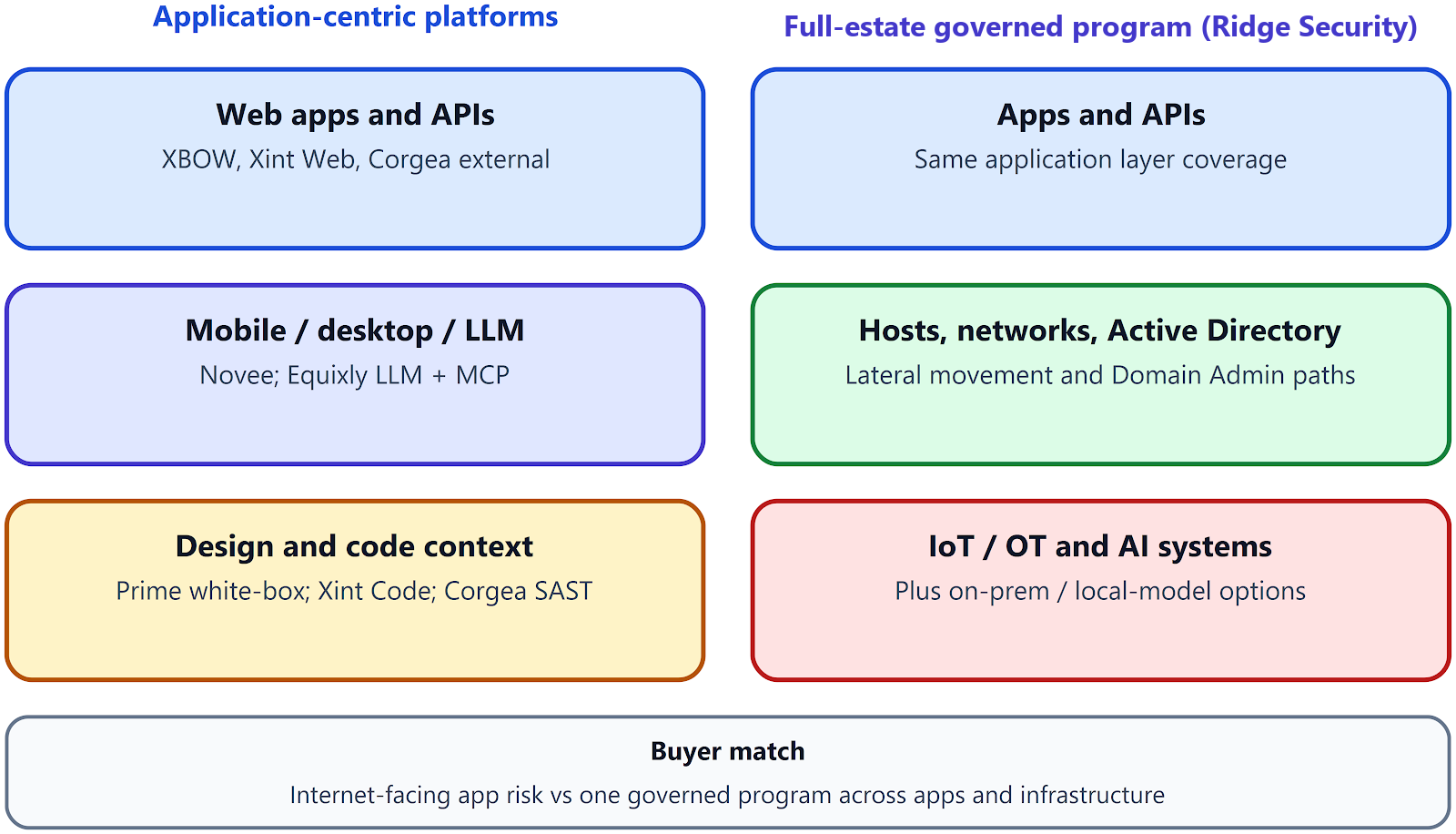
Figure 4: Application-centric versus full-estate coverage
Coverage is only the first cut. Two platforms can both test web applications and still diverge on deployment residency, evidence quality and how tightly they fit an existing AppSec or SOC workflow.
The section below turns that cut into a selection sequence you can run with a shortlist of two or three vendors against the same scoped target.
How to choose
Start with scope, then deployment, then evidence.
- If your exposure is mostly internet-facing web applications and APIs and SaaS is acceptable, XBOW, Novee, Equixly and Xint.io are all credible options, and Ridge Security covers this layer as well.
- If you need one platform across applications and infrastructure, including networks, Active Directory and IoT/OT, or must keep testing data on-premises or inside segmented networks, Ridge Security is the only platform in this group whose public scope covers both requirements.
- If APIs, MCP servers and LLM applications are where you are growing fastest, look closely at Equixly and Novee, and at RidgeGen’s testing of AI systems.
- If you want offensive testing tied to design and code review, Prime Security and Corgea are built around that workflow.
Then run a proof of value. Point each shortlisted platform at the same scoped target, ideally one of your own staging environments, and compare:
- validated findings and false positives
- critical and business-logic findings
- time to result and total cost, including any AI tokens
- quality of evidence and remediation guidance
- how well retesting confirms a fix
Review the guardrails and audit logs with your operations team before anything touches production.
Finally, keep people in the loop. The strongest programs use autonomous testing for continuous coverage and reserve expert human testers for novel research, high-risk changes and formal attestations.
Figure 5 sequences that selection path: decide scope, then deployment residency, then evidence and guardrails, run a proof of value on the same target, and keep expert humans in the loop for novel research and attestations.
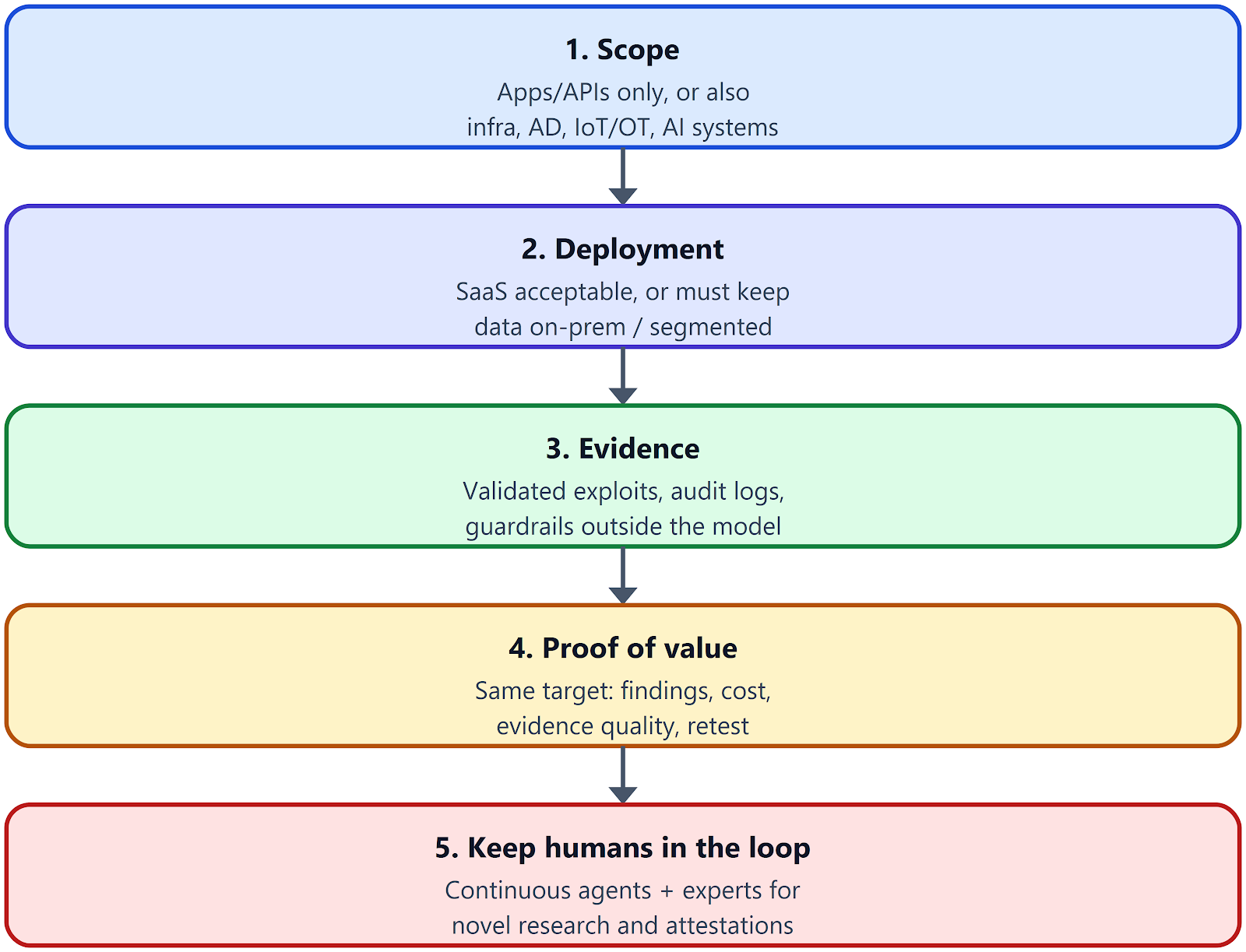
Figure 5: Buyer decision sequence for platform selection
Frequently asked questions
What is autonomous penetration testing?
Autonomous penetration testing uses AI agents to plan and execute scoped attacks against your systems, verify which weaknesses are actually exploitable, and report them with evidence and remediation guidance, continuously rather than once or twice a year.
How is it different from DAST or breach and attack simulation?
DAST runs predefined checks against a running application, and BAS replays known attack scenarios to test security controls. Autonomous pentesting reasons about your specific environment, chains weaknesses into attack paths, and proves exploitability.
Can autonomous pentesting replace human pentesters?
Not entirely. It provides continuous, repeatable coverage at a scale people cannot match, but expert testers remain important for novel research, complex high-risk systems and compliance attestations. Most mature programs combine both.
Is it safe to run against production?
It can be, if guardrails are enforced outside the AI model. Look for graded testing modes (for example, Ridge Security’s Safe, Guarded and Authorized-Aggressive zones), strict scope confinement, approval gates for intrusive actions, credential isolation and complete audit logs.
Which autonomous pentesting platforms can run on-premises?
Among the platforms in this guide, Ridge Security deploys RidgeGen on-premises as a self-contained package and offers RidgeOne as a turnkey appliance with a local open-weight model. Novee reportedly offers bastion-node and on-premises options. XBOW states that it runs only as SaaS. For the others, check with the vendor.
Does the choice of AI model matter?
Yes, but less than many buyers assume. Ridge Security’s eight-model benchmark found that the most capable general-purpose model was not automatically the best autonomous pentester, and that coverage and cost varied widely by model. The surrounding harness (planning, execution control, verification and guardrails) matters as much as the model.
What does it mean that Ridge Security is an IDC Innovator?
IDC named Ridge Security an IDC Innovator in IDC Innovators: Autonomous Penetration Testing for DevSecOps, 2026 (doc #US54175326, July 2026). IDC Innovators reports highlight emerging vendors with under $100 million in annual revenue, chosen by an IDC analyst for an innovative technology or business model. They are not exhaustive evaluations or rankings.
References
Ridge Security
- Ridge Security Named an IDC Innovator for Agentic Autonomous Penetration Testing (Business Wire, July 2026)
- Ridge Security Launches RidgeGen (Business Wire, August 2026)
- RidgeGen product page
- RidgeBot 7.0 automates Active Directory attack simulations (Help Net Security, June 2026)
- RidgeOne keeps autonomous penetration testing data inside customer environments (Help Net Security, October 2026)
- Ridge Security Launches RidgeOne for AI Pentesting (TechIntelPro, October 2026)
- The Harness Advantage in Autonomous Red Teaming (Ken Huang, September 2026)
- Ridge Security Publishes Benchmark Comparing Leading AI Models for Autonomous Red Teaming (September 2026)
- Agentic AI Pentest Showdown: RidgeGen vs. Shannon vs. Strix (Ridge Security, March 2026)
- Frost & Sullivan 2026 New Product Innovation Recognition for RidgeBot (Business Wire, April 2026)
- 2026 Intellyx Digital Innovator Award (Business Wire, June 2026)
- RidgeBot Wins 2026 GOVIES Award (Business Wire, May 2026)
- RidgeBot on AWS Marketplace
- RidgeBot reviews on G2
XBOW
- XBOW on AWS Marketplace
- XBOW Raises $75M Series B (XBOW, June 2025)
- XBOW Raises $120M Series C (TAM Radar, March 2026)
- XBOW: $35 Million Added To Series C (Pulse 2.0, May 2026)
- XBOW Embeds Continuous Penetration Testing in the Microsoft Security Ecosystem (Business Wire, March 2026)
- Agents Built From Alloys (XBOW)
- We Ran 1,060 Autonomous Attacks (XBOW, March 2026)
Novee
- Novee Emerges From Stealth With $51.5M (Business Wire, January 2026)
- Novee launches with $51.5M (SiliconANGLE, January 2026)
- Novee introduces autonomous AI red teaming (Help Net Security, March 2026)
- Novee Expands AI Penetration Testing Platform to Mobile Applications (TechIntelPro, July 2026)
- Understanding Novee (NHI Mgmt Group)
Equixly
- Equixly Raises €10 Million Series A (Equixly, December 2025)
- Equixly partners with Checkmarx (Checkmarx, March 2026)
- Equixly MCP Integration (Equixly, June 2026)
- Can AI identify 0-days? CVE-2026-0773 (Equixly, January 2026)
- 10 best continuous penetration testing vendors of 2026 (Equixly, June 2026)
Xint.io
- About Xint
- Xint Platform
- Xint.io Launches Xint Pulse (Business Wire, July 2026)
- Theori supplies Xint Web to Woori Financial Group (DigitalToday, August 2026)
Prime Security
- Prime Security Raises $20M From Scale Venture Partners (Business Wire, December 2025)
- Cyber veterans from PayPal and OwnBackup land $20 million Series A (Calcalist, December 2025)
- Agentic security firm Prime Security bags $20m Series A (FinTech Global, December 2025)
- Prime Security Introduces a New Operating Model for Product Security (EIN Presswire, August 2026)
Corgea